


Coaching
We won’t know everything right away – and that’s precisely the point: to ask good questions and get to the heart of it. If you knew what wasn’t working and why, you wouldn’t need me.





More…
We’ll get on if you value openness and look for specifics.
Coaching is classified as a ‘soft’ skill, but this work demands a hard approach.
So there’s work to be done for both of us. To get us going, I might provoke, or we might laugh at the absurdities of everyday life. We’ll do what it takes to break the stagnation and act.
Good coaching is like a chat over coffee with a good mate: it adds energy, clarifies thoughts, at times gives you a gentle shake, but does wonders to the mind and body.
Who it is for
This is for you if:
- Professional decisions more often stem from ‘that’s what you have to do’ than from your own priorities,
- You notice that making conscious choices in line with your values is a challenge,
- You need structure so that intention becomes a plan, and the plan turns into action,
- You hold the position or have the title of leader, manager, or expert, but you don’t feel it, and want to organise priorities,
- You’re responsible for creating projects and developing people, independently or in teams,
- You suspect your organisation is approaching a turning point due to the market, competition, legislation, or the economy, and you want to make decisions with greater confidence.
How we work
- 1:1 sessions (online or in person).
- Context → goal → plan: we start by organising the situation, defining the effect, and establishing steps and rhythm.
- Between sessions: short tasks consolidating decisions in practice.
- Tailoring: we’ll adapt techniques and methods to your situation, not the other way round.
- My goal is to become unnecessary as quickly as possible. 😉 Unless we’re looking for a strategy for a new project, but that’s another story.
What you gain
- Clarity: we identify what you want, what you need, and how one works with the other; we pinpoint what really matters to you and what that means for your work.
- Decisiveness: simpler selection criteria means less noise – how to recognise and apply them.
- Momentum: series of short actions that are visible in the calendar and deliver results. You experience success in the process as well as in achieving goals.
Still not sure if this is for you?
Answer a few simple questions and check whether coaching is a solution tailored to your needs. Find out whether it can bring you real benefits and support important changes.
FAQ
Below, you’ll find answers to the questions that most often come up in conversations with clients. They will help you quickly understand what to expect and how working with me looks.
1. What is coaching and who is it for?
It is a structured process of working toward a goal. Through questions, simple exercises, and tasks between sessions, we organise thinking, decisions, and habits to create real movement. I work with leaders and founders, managers in role transitions, specialists and creators, people at professional turning points, and teams. It is not therapy. If I believe another form of support would be better, I recommend the right path. A standard process is 6-10 sessions, though sometimes we close a topic in 3 meetings.
2. How is coaching different from mentoring?
A coach does not advise: they ask questions and help you reach your own solutions. A mentor shares experience and concrete guidance.
3. What does a session look like?
A 45-60 minute conversation during which the coach asks questions and you build your own solutions. The coach does not act for you.
4. How do you set an effective goal?
It should be positive, measurable, time-bound, and realistic. The coach uses models such as GROW, SMART, GOLD, the Iceberg model, Action Plan, Ishikawa Diagram, and others.
5. Does coaching work only in a work context?
No. Coaching covers different areas, including life coaching, business coaching, and executive coaching.
6. How long does a coaching process last?
Usually 6-12 meetings every 1-2 weeks. The pace depends on you.
7. Does a coach give advice?
No. A coach does not give ready-made answers: they support you in discovering your own.
8. Is coaching therapy?
No. Coaching works with the future, not with the past and trauma. That is the domain of psychotherapy.
9. What is a coaching contract?
It is our shared agreement on the rules of cooperation: goal and success measures, working framework (number and length of sessions, frequency, tasks between meetings), roles and responsibilities (you decide, I guide the process), confidentiality, contact boundaries, and cancellation rules. As a standard, we work in cycles of 6-10 sessions of 60-75 minutes, though sometimes we close a topic in 3 meetings. I work in accordance with the EMCC code.
10. When doesn’t coaching work?
When you expect ready-made solutions or decisions made for you, do not want to take responsibility for implementation, count on a quick result without work, or the topic is clinical and requires therapy. Then mentoring, consultation, or work with a psychotherapist will be better.
Certificates & diplomas
Certificates and diplomas show not only my qualifications, but also the path I have walked to be able to support you. This helps me support your growth in a thoughtful and effective way.
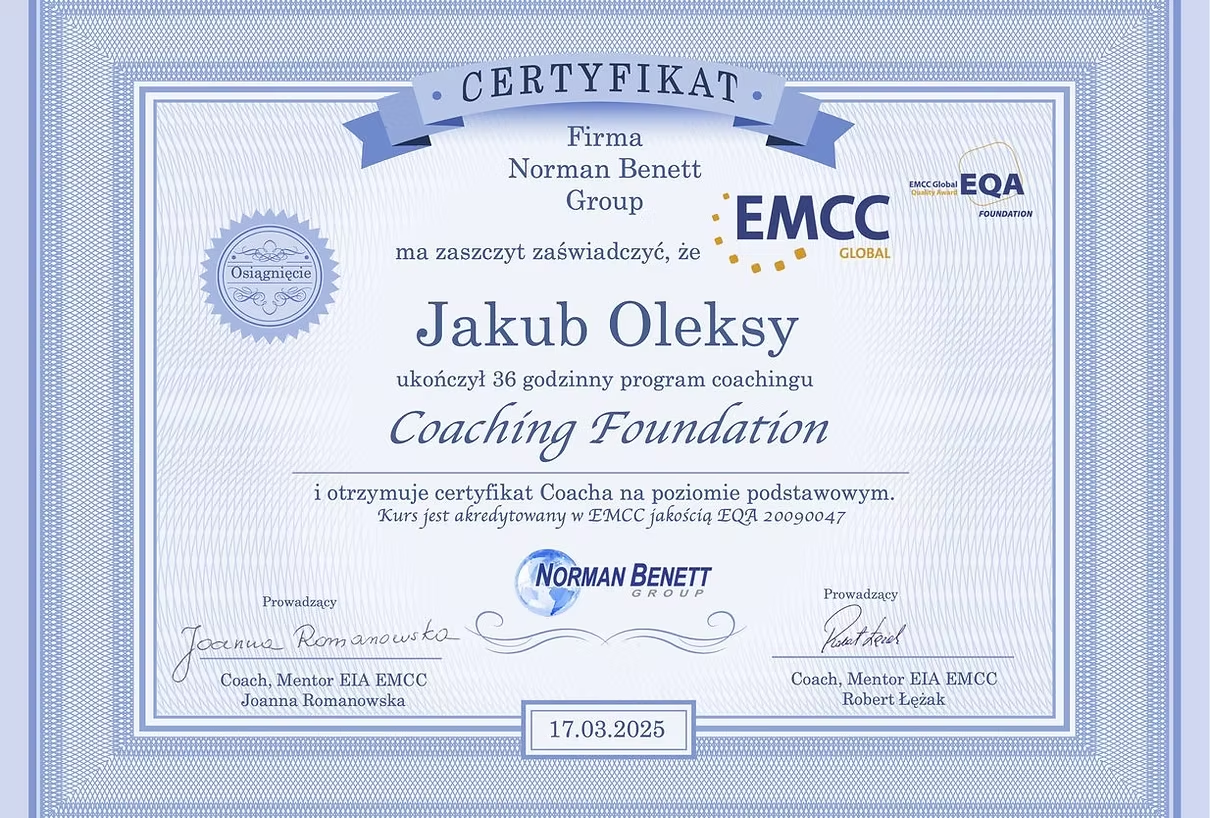
Norman Benett Group & EMCC Global, Mentoring Diploma
I have completed the prestigious EMCC Global Coaching Foundation course, organised by the European Mentoring & Coaching Council, one of the leading organisations setting standards in coaching and mentoring practice worldwide. This certificate is an official summary and confirmation of years of experience, combining practical knowledge with recognised standards of professionalism and ethics.
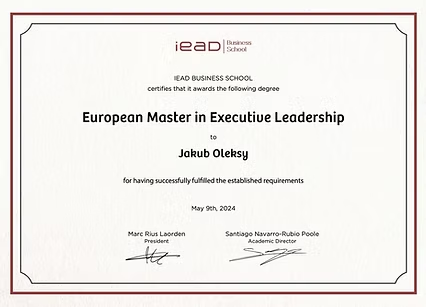
iEAD Business School, European Master in Executive Leadership
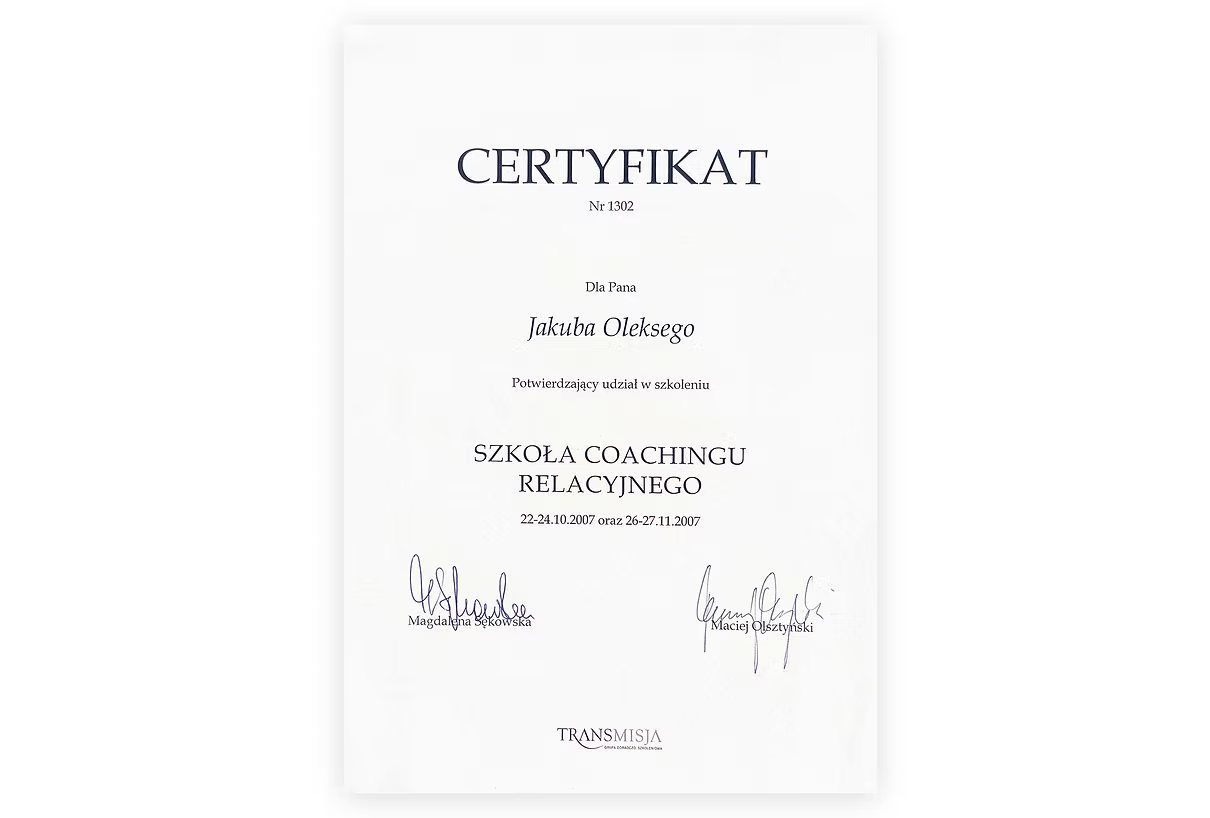
Transmisja, Certificate from the School of Relational Coaching